
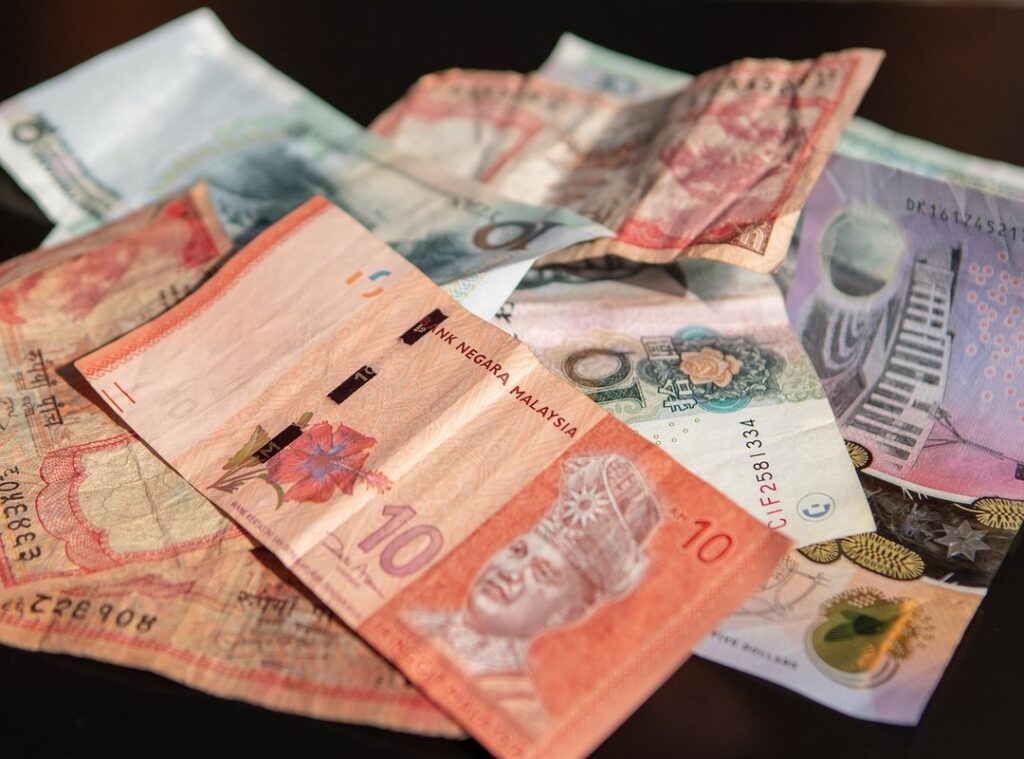
700 ringgit berapa rupiah? As of today, 700 Malaysian Ringgit (MYR) is worth about [insert current rate] Indonesian Rupiah (IDR).
This number changes all the time, and it can be confusing. But don’t worry. This article will not only give you the answer but also explain why the rate fluctuates.
You’ll learn how to check the live rate yourself. We’ll cover what factors influence the exchange rate. And we’ll show you how to get the best deal when converting currency.
Think of this as your complete guide for anyone dealing with MYR and IDR conversions. Let’s dive in.
Understanding the MYR to IDR Exchange Rate Today
Let’s start with the basics. MYR stands for Malaysian Ringgit, and IDR stands for Indonesian Rupiah. Simple enough, right?
When you want to convert 700 MYR to IDR, it’s just a matter of multiplication. For example, if the current rate is 1 MYR = 3,450 IDR, then 700 MYR would be 2,415,000 IDR.
Here’s a small table to show how 700 MYR in IDR has changed over the last week:
| Date | 700 MYR in IDR |
|---|---|
| Oct 1 | 2,410,000 |
| Oct 2 | 2,420,000 |
| Oct 3 | 2,415,000 |
| Oct 4 | 2,405,000 |
| Oct 5 | 2,418,000 |
| Oct 6 | 2,422,000 |
| Oct 7 | 2,417,000 |
As you can see, the value can fluctuate quite a bit. This is why it’s important to keep an eye on the exchange rate if you’re planning to convert 700 ringgit berapa rupiah.
The mid-market rate is the real exchange rate without any fees. It’s the midpoint between the buy and sell rates on the global currency markets. This rate is crucial because it gives you a benchmark to compare against when you go to a bank or money changer.
Speaking of banks and money changers, the rate you see online might differ slightly from what they offer. Why, and because they add their service fees.
So, if you see 1 MYR = 3,450 IDR online, the actual rate you get might be a bit less.
In the end, understanding these nuances can help you make better financial decisions. But let’s be honest, the market can be unpredictable. Even with all the data, there’s always some uncertainty.
What Makes the Ringgit-Rupiah Value Change?
Imagine the currency market as a giant farmers’ market. The ringgit and rupiah are like different types of fruits, and their prices go up or down based on how much people want to buy them.
When Malaysia’s economy is doing well—like when GDP growth is strong and inflation is under control—the ringgit tends to be in high demand. The same goes for Indonesia and the rupiah.
Interest rates set by central banks, like Bank Negara Malaysia and Bank Indonesia, play a big role too. Higher interest rates can attract more foreign investors, making the currency stronger.
Major commodities also matter. For Malaysia, palm oil is a big deal. When palm oil prices rise, it can boost the ringgit.
Similarly, coal prices affect the rupiah because Indonesia is a major coal exporter.
Political stability and news events can cause short-term ups and downs. If there’s a sudden political crisis or a major economic announcement, the currency might fluctuate quickly.
Think of the currency strength like the stock price of a country’s economy. When the economy is healthy and stable, the “stock” (currency) performs better. Shmghealth
So, what should you do, and keep an eye on these factors. If you’re planning to convert 700 ringgit berapa rupiah, check the current exchange rate and consider the recent economic and political news.
It’s all about timing and being informed.
How to Check the Live Exchange Rate Yourself (3 Easy Steps)

Ever wondered how to get the most accurate exchange rate? It’s easier than you think, and let’s dive in.
First, use reliable online currency converters. Stick with trusted sources like Google Finance, XE.com, or OANDA. These sites give you the mid-market rate, which is the fairest rate.
Next, check your bank’s official website. Banks have their own ‘buy’ and ‘sell’ rates, which include their profit margin. This can be a bit higher than the mid-market rate, so it’s good to know both.
If you’re exchanging cash, compare rates at several reputable money changers. Look for places that clearly display their rates with no hidden fees. Transparency is key here.
Avoid just searching and trusting the first result without verifying the source. Some sites may have outdated information, and that can cost you.
For large amounts, even a small difference in the exchange rate can save you a significant amount of money. Pro tip: Always double-check before making a big transaction.
So, if you need to know 700 ringgit berapa rupiah, follow these steps. You’ll get the best and most up-to-date rate.
Common Mistakes to Avoid When Exchanging Currency
Exchanging money at the airport, and big mistake. Airport kiosks typically offer the worst exchange rates due to convenience fees.
Forgetting to account for fees is another common pitfall. Those ‘zero commission’ claims often hide poor exchange rates, so always read the fine print.
Using Dynamic Currency Conversion (DCC) can also be a trap. Always choose to pay in the local currency (IDR in Indonesia) when using a credit card to avoid unfavorable conversion rates.
Exchanging too much cash at once is a no-no. Convert smaller amounts as needed to avoid being stuck with excess foreign currency.
Pro tip: If you’re heading to Indonesia and need to know how much 700 ringgit berapa rupiah, do your research beforehand. It’s better to have a rough idea of the conversion rate before you hit the ATM or exchange counter.
By avoiding these mistakes, you can save a lot of money and stress.
Getting the Most Value for Your Ringgit
While 700 ringgit berapa rupiah converts to a specific amount of Rupiah today, that value is always in motion. Understanding the ‘why’ behind these changes, from economic factors to supply and demand, is crucial.
You now know the simple steps to check the live rate. Avoid common pitfalls like not comparing rates or ignoring fees.
By being informed, you can ensure you’re always getting a fair deal on your currency exchange.
 Stephen Tepperonic is the kind of writer who genuinely cannot publish something without checking it twice. Maybe three times. They came to fitness tips and routines through years of hands-on work rather than theory, which means the things they writes about — Fitness Tips and Routines, Health and Wellness News, Mental Health Resources, among other areas — are things they has actually tested, questioned, and revised opinions on more than once.
That shows in the work. Stephen's pieces tend to go a level deeper than most. Not in a way that becomes unreadable, but in a way that makes you realize you'd been missing something important. They has a habit of finding the detail that everybody else glosses over and making it the center of the story — which sounds simple, but takes a rare combination of curiosity and patience to pull off consistently. The writing never feels rushed. It feels like someone who sat with the subject long enough to actually understand it.
Outside of specific topics, what Stephen cares about most is whether the reader walks away with something useful. Not impressed. Not entertained. Useful. That's a harder bar to clear than it sounds, and they clears it more often than not — which is why readers tend to remember Stephen's articles long after they've forgotten the headline.
Stephen Tepperonic is the kind of writer who genuinely cannot publish something without checking it twice. Maybe three times. They came to fitness tips and routines through years of hands-on work rather than theory, which means the things they writes about — Fitness Tips and Routines, Health and Wellness News, Mental Health Resources, among other areas — are things they has actually tested, questioned, and revised opinions on more than once.
That shows in the work. Stephen's pieces tend to go a level deeper than most. Not in a way that becomes unreadable, but in a way that makes you realize you'd been missing something important. They has a habit of finding the detail that everybody else glosses over and making it the center of the story — which sounds simple, but takes a rare combination of curiosity and patience to pull off consistently. The writing never feels rushed. It feels like someone who sat with the subject long enough to actually understand it.
Outside of specific topics, what Stephen cares about most is whether the reader walks away with something useful. Not impressed. Not entertained. Useful. That's a harder bar to clear than it sounds, and they clears it more often than not — which is why readers tend to remember Stephen's articles long after they've forgotten the headline.