
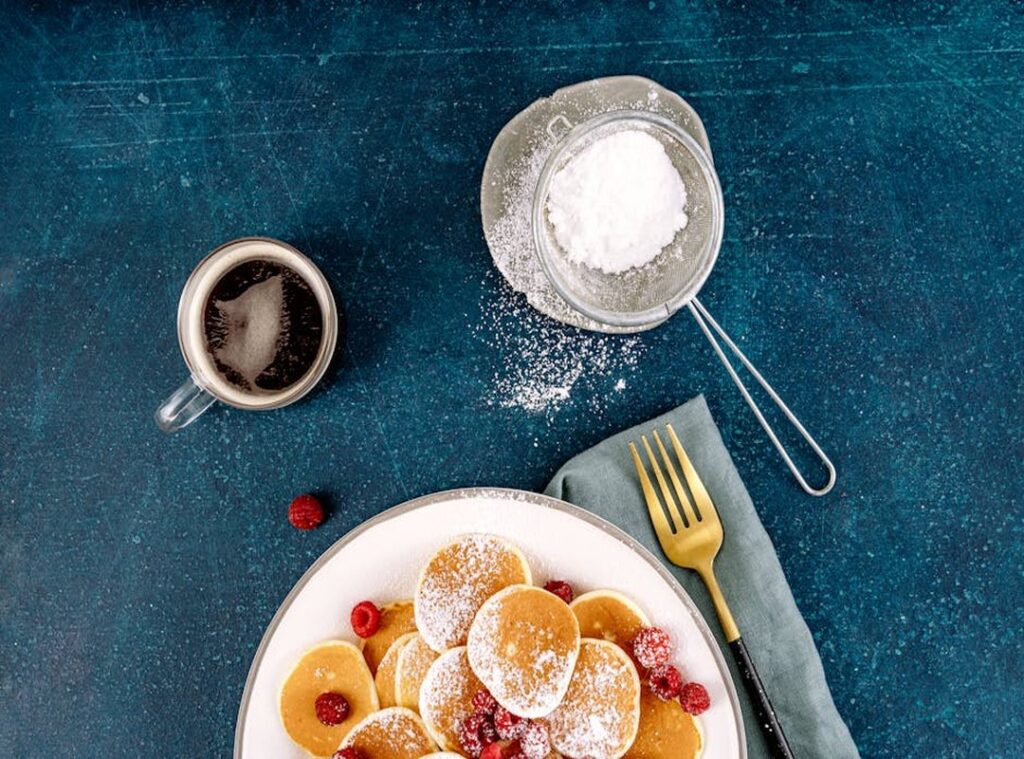
The aroma of semolina fills the air, mingling with the sizzle of batter on a hot griddle. Fresh mint tea steams in small glasses, adding a touch of coolness to the morning.
Baghrir and Msemen are the stars of the Moroccan breakfast table. Baghrir, those spongy, crater-filled pancakes, and Msemen, the flaky, square-shaped flatbread, make for a delightful start to the day.
But let’s be real, trying to make these at home can be a challenge. You might end up with flat, dense, or unevenly cooked pancakes.
The solution? baghrir kookmutsjes. These traditional cookware pieces are designed specifically for making perfect, authentic Moroccan pancakes.
This guide will show you which molds to use and how to use them. But it’s not just about the tools. We’ll also dive into the cultural significance and techniques that will transform your breakfast into an authentic Moroccan experience.
Beyond the Batter: Understanding Baghrir and Msemen
Let’s start with Baghrir, the ‘thousand-hole pancake.’ Its unique texture comes from a yeasted semolina batter. The holes are crucial for soaking up honey and melted butter.
The cooking surface’s material and heat distribution directly impact the formation of these signature holes. A well-seasoned cast-iron skillet or a non-stick pan can make all the difference. Trust me, I’ve tried both, and the results are night and day.
Now, let’s shift to Msemen, the laminated, square pancake. It has a chewy, layered texture, achieved by folding dough with oil and semolina. This process creates those delightful, flaky layers that melt in your mouth.
While Msemen doesn’t use a ‘mold’ in the same way, the type of flat, heavy-bottomed pan is critical for achieving the golden-brown, flaky finish. A good, heavy pan distributes heat evenly, ensuring that each layer gets perfectly cooked. (I’ve had my fair share of burnt Msemen, and it’s not pretty.)
These pancakes are more than just breakfast food. They’re a cultural staple, often enjoyed during afternoon tea and especially during the holy month of Ramadan. There’s something about the warmth and comfort they bring that makes them a must-have.
Baghrir kookmutsjes, anyone? (Yes, I know it’s a bit of a mouthful, but it’s worth saying.)
The recipe is only half the battle; the right cooking vessel is the other essential half. Whether you’re making Baghrir or Msemen, having the right tools can turn a good pancake into a great one.
A Buyer’s Guide to Authentic Moroccan Pancake Molds & Pans
When it comes to making traditional Moroccan baghrir, the right pan can make all the difference.
Traditional molds for baghrir are often made from terracotta or clay. These materials are porous, which means they distribute heat gently and evenly. This is perfect for creating those signature bubbles in your baghrir.
But let’s be real. There are pros and cons to using these traditional molds. On the plus side, you get unmatched authenticity and a unique flavor that just can’t be replicated with other materials.
However, these pans require seasoning, can be fragile, and need careful heat management. If you’re not up for that, it might be a bit of a hassle.
For those who want something more user-friendly, modern alternatives like cast iron or heavy-duty non-stick pans with multiple small indentations are great.
These options are easier to use and maintain. Plus, they still give you a pretty good texture. But if you’re after that true Moroccan experience, nothing beats the real deal.
Now, let’s talk about msmen. The ideal pan for msmen is a wide, heavy-bottomed griddle, often called a maqla. Cast iron or thick aluminum works best.
These materials provide consistent heat, which is crucial for cooking the folded layers evenly. You don’t want any part of your msmen to be undercooked or burnt.
If you’re in the market for a new baghrir or msmen pan, here are some practical tips. Look for weight and material that suits your needs.
Clay and terracotta should feel solid and well-made. Cast iron and non-stick pans should have a good heft to them.
You can find these pans at Middle Eastern markets or specialized online culinary stores. Just make sure to read reviews and check the quality before you buy.
One last tip: if you go for a clay or cast iron pan, you’ll need to season it before its first use. This helps prevent sticking and ensures longevity.
Just coat the pan with a thin layer of oil and heat it in the oven for an hour. Simple, but effective.
And hey, while we’re on the topic of taking care of things, why not take a moment to think about how your workplace culture is impacting your mental health? It’s worth considering, especially when you’re trying to balance life and the little joys of making baghrir kookmutsjes and msmen.
how workplace culture affects mental well being
From Pan to Plate: Mastering the Technique

Making perfect Baghrir is like conducting a symphony. Each step needs to be in harmony, and start with your Baghrir mold .
First, heat it on medium-low, and this is key. Think of it as a gentle simmer, not a rolling boil.
A common mistake is cranking up the heat too high.
Ladle the batter into the mold, and don’t spread it. Let it settle naturally.
Watch for the visual cues, and the surface should bubble and dry out. It’s like watching a field of tiny volcanoes erupt.
Cook it on one side only, and this is crucial.
If no holes form, the batter might be too thick or the pan not hot enough. Adjust accordingly.
If the bottom burns, the heat is too high. Turn it down.
For Msemen, it’s all about the stretch and fold. Imagine you’re tucking in a bed, but with dough. Stretch it thinly, fold it into a square, and get it on the griddle.
Flip frequently. This encourages the layers to separate and puff up. It’s like giving the pancake a little dance to help it breathe.
Patience and observation are your best friends here. The first one or two pancakes are often a test. They help you get the temperature just right.
Remember, using baghrir kookmutsjes can make the process easier, but the technique is what truly matters.
Bringing a Taste of Morocco to Your Kitchen
Authentic Moroccan pancakes are a product of both a great recipe and the right, time-honored tools.
Using a traditional mold or the proper pan is not just about shape; it’s about achieving a texture that is fundamental to the dish.
Embarking on this culinary journey is more than just cooking; it’s about connecting with a rich and flavorful heritage.
Imagine the aroma of baghrir kookmutsjes filling your kitchen, transporting you straight to the vibrant streets of Marrakech.
Serve your homemade Baghrir or Msemen the classic way, drizzled with a warm mixture of honey and butter, alongside a fresh pot of mint tea.
 Jorvanna Zyphandra is the kind of writer who genuinely cannot publish something without checking it twice. Maybe three times. They came to nutrition and meal planning through years of hands-on work rather than theory, which means the things they writes about — Nutrition and Meal Planning, Exercise Techniques and Guides, Mental Health Resources, among other areas — are things they has actually tested, questioned, and revised opinions on more than once.
That shows in the work. Jorvanna's pieces tend to go a level deeper than most. Not in a way that becomes unreadable, but in a way that makes you realize you'd been missing something important. They has a habit of finding the detail that everybody else glosses over and making it the center of the story — which sounds simple, but takes a rare combination of curiosity and patience to pull off consistently. The writing never feels rushed. It feels like someone who sat with the subject long enough to actually understand it.
Outside of specific topics, what Jorvanna cares about most is whether the reader walks away with something useful. Not impressed. Not entertained. Useful. That's a harder bar to clear than it sounds, and they clears it more often than not — which is why readers tend to remember Jorvanna's articles long after they've forgotten the headline.
Jorvanna Zyphandra is the kind of writer who genuinely cannot publish something without checking it twice. Maybe three times. They came to nutrition and meal planning through years of hands-on work rather than theory, which means the things they writes about — Nutrition and Meal Planning, Exercise Techniques and Guides, Mental Health Resources, among other areas — are things they has actually tested, questioned, and revised opinions on more than once.
That shows in the work. Jorvanna's pieces tend to go a level deeper than most. Not in a way that becomes unreadable, but in a way that makes you realize you'd been missing something important. They has a habit of finding the detail that everybody else glosses over and making it the center of the story — which sounds simple, but takes a rare combination of curiosity and patience to pull off consistently. The writing never feels rushed. It feels like someone who sat with the subject long enough to actually understand it.
Outside of specific topics, what Jorvanna cares about most is whether the reader walks away with something useful. Not impressed. Not entertained. Useful. That's a harder bar to clear than it sounds, and they clears it more often than not — which is why readers tend to remember Jorvanna's articles long after they've forgotten the headline.