
I’ve spent years watching people burn out on health advice that sounds great but falls apart after two weeks.
You’re probably tired of conflicting information. One expert says carbs are fine. Another says they’ll kill you. Someone swears by morning workouts while your friend only exercises at night and looks amazing.
Here’s the truth: most health advice overcomplplicates things.
You don’t need a perfect meal plan or a gym membership that costs more than your car payment. You need basics that work with your actual life.
This guide gives you shmghealth fitness hacks from springhillmedgroup that are backed by medical professionals who understand real bodies and real schedules.
We focus on what actually moves the needle for your health. Not trends that disappear in six months.
You’ll get straightforward guidance on fitness routines that don’t require two hours a day. Nutrition advice that doesn’t ban entire food groups. Mental wellness strategies you can use today.
No complex protocols. No restrictive plans that make you miserable.
Just practical steps grounded in proven principles that help you feel better and stay consistent.
The Foundation of Fitness: Consistency Over Intensity
You’ve probably seen those workout videos where someone’s doing burpees until they collapse.
That’s not what I’m talking about here.
Most people think fitness means pushing yourself to the limit every single time. They go hard for two weeks and then burn out completely (usually right around the time Netflix releases a new series).
Here’s what actually works.
Showing up matters more than going all out.
I know some trainers will disagree with me. They’ll say you need high intensity to see real results. That moderate exercise is just maintenance at best.
But here’s what they’re missing. Those intense workouts only help if you actually do them. And most people don’t stick with them past a month.
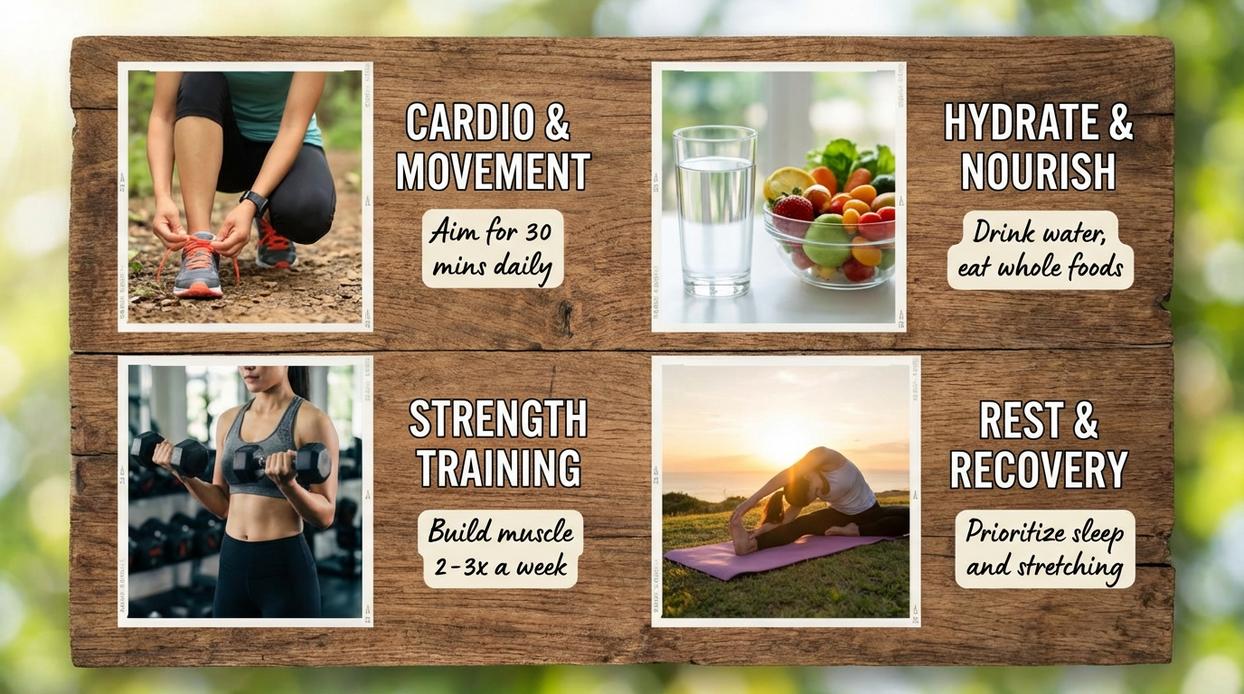
The research backs this up. Health professionals recommend 150 minutes of moderate activity per week. That’s it. Not CrossFit. Not marathon training. Just consistent movement.
Break it down and it’s a 30-minute walk five days a week. You could do that during your lunch break.
Here’s where I think we’re headed. More people will figure out that the fitness guide shmghealth approach of building sustainable habits beats the Instagram workout culture. We’ll see a shift away from extreme programs toward what actually keeps people healthy long term.
The benefits go way beyond weight loss too. Regular movement improves your cardiovascular health. You sleep better. Your stress levels drop.
These aren’t small things. They’re the difference between feeling okay and actually feeling good.
Pro Tip: Start with a 10-minute walk after dinner. It helps with digestion and blood sugar regulation. Once that feels easy, add another 10 minutes somewhere else in your day.
I’ve watched too many people try to go from zero to hero overnight. It doesn’t work. What works is finding something you can do today and tomorrow and next week.
The shmghealth fitness hacks from springhillmedgroup focus on this exact principle. Small moves that compound over time.
You don’t need to love exercise. You just need to do it regularly enough that your body adapts and starts craving it.
That’s when everything changes.
Nutrition Simplified: Fueling Your Body for Optimal Health
You’ve probably heard it before.
Cut carbs. Go keto. Avoid fat. Count every calorie.
I’m not going to tell you any of that.
Here’s why. Most diet advice treats food like the enemy. You’re always restricting something or feeling guilty about what you ate.
Some experts will tell you that strict meal plans are the only way to see results. They say you need to weigh everything and track every macro down to the gram.
And sure, that works for some people. Bodybuilders before a competition? Athletes in training camps? Yeah, they might need that level of control.
But for most of us? It’s just not realistic.
What I’ve learned from working with real people (not fitness models with personal chefs) is that simple beats perfect every single time.
Let me show you what actually works.
The Plate Method That Actually Makes Sense
Forget counting anything for a second.
Look at your plate. Half of it should be non-starchy vegetables. A quarter goes to lean protein. The last quarter is for complex carbs like brown rice or sweet potatoes.
That’s it. No app needed.
Water Isn’t Optional
I know you’ve heard this a million times. But most people I talk to are walking around dehydrated and wondering why they feel like garbage.
Your cells need water to function. Your metabolism needs it. Your energy levels depend on it.
Try this. Take your body weight and divide it by two. That’s how many ounces you should aim for daily. If you weigh 160 pounds, that’s 80 ounces of water.
Add Before You Subtract
Here’s where I disagree with most diet culture.
Stop obsessing over what you can’t eat. Start thinking about what you can add.
Want better energy? Add more whole foods. Your body knows what to do with an apple or a handful of almonds. It gets confused by processed stuff with 40 ingredients.
This shift changes everything. You’re not depriving yourself. You’re just crowding out the junk with better options.
What I Keep in My Kitchen
Some foods just make life easier. I always stock these because they’re versatile and I can throw together something decent even when I’m tired:
Oats give you fiber and keep you full. They’re cheap and you can dress them up however you want.
Lentils are protein without the meat price tag. They cook fast and work in soups or salads.
Frozen berries last forever and give you antioxidants year-round (fresh berries go bad in like two days).
Greek yogurt packs protein and works for breakfast or as a base for dips and dressings.
Olive oil is your go-to healthy fat. Use it for cooking or drizzle it on vegetables.
The shmghealth fitness hacks from springhillmedgroup I share with clients aren’t complicated. They’re just consistent habits that add up over time.
You don’t need a perfect diet. You need one you can actually stick with on a random Tuesday when nothing goes according to plan.
The Overlooked Pillars: Sleep, Recovery, and Mental Wellness
Most fitness content tells you about workouts and protein intake.
But nobody talks about what happens when you’re not in the gym.
Here’s what I’ve noticed. People crush their training sessions and dial in their nutrition. Then they wonder why they’re not seeing results. Or why they feel burned out after a few weeks.
The answer? They’re ignoring the basics that actually make everything else work.
Some experts say sleep is just as important as exercise. Others claim you can get by on less if you’re young or have good genetics. They’ll point to CEOs who brag about four-hour nights.
But the research tells a different story.
Your body needs 7-9 hours of quality sleep. Not because it sounds nice. Because that’s when your muscles actually repair themselves. It’s when your hormones reset (cortisol drops, ghrelin stabilizes). Miss that window and you’re basically working against yourself.
I learned this the hard way. I used to think sleep was negotiable. Turns out, skipping it is like trying to build a house while someone tears down what you finished yesterday.
Now let’s talk about recovery days.
You don’t need to go hard seven days a week. In fact, you shouldn’t. On your off days, gentle movement beats sitting on the couch. A 20-minute walk or some light stretching improves blood flow to your muscles. That’s how they actually heal.
Think of it as maintenance work. You’re not building. You’re repairing.
And here’s something most people skip entirely: mental resets.
When stress hits, your body doesn’t care if it’s from work or workouts. It responds the same way. That’s where what is health risk advice shmghealth becomes relevant.
Try this right now. Box breathing. Inhale for four seconds. Hold for four. Exhale for four. Hold for four. Do that three times.
Your heart rate will drop. Your mind will clear. It takes less time than scrolling social media.
Here’s the thing nobody wants to admit. Physical fitness and mental wellness aren’t separate. When you sleep better, you handle stress better. When you manage stress, you recover faster. When you recover faster, you see better results from your training.
It all connects.
The shmghealth fitness hacks from springhillmedgroup that work best? They’re not complicated. They’re just the fundamentals that everyone skips because they seem too simple.
Sleep enough. Move gently on rest days. Take five minutes to breathe.
Do that consistently and you’ll outperform people who ignore it.
Your Path to a Healthier Life Starts Now
You came here because you’re tired of the confusion.
Every week there’s a new diet trend or workout fad promising results. It’s exhausting trying to figure out what actually works.
I created this guide to cut through that noise. You don’t need extreme measures or complicated systems to get healthier.
What you need is a simple framework built on things that actually work. Professional advice that focuses on sustainable fitness, good nutrition, and proper recovery.
The truth is that small actions add up. A 10-minute walk matters more than you think. Using the Plate Method for one meal is better than overhauling your entire diet overnight.
These shmghealth fitness hacks from springhillmedgroup give you a holistic system. One that supports your well-being without burning you out.
Here’s what I want you to do: Pick one tip from this guide right now. Maybe it’s that walk or trying a new meal approach. Just one thing.
Commit to it today.
Your journey to better health doesn’t start with a complete transformation. It starts with a single step you’re willing to take. Homepage. Shmghealth.